at Grinnell College Special Collections & Archives

Category: Research

Incunabula at Grinnell Project

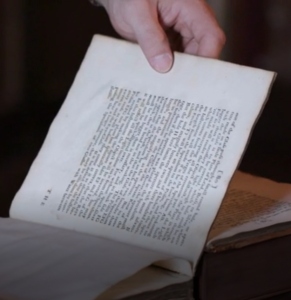
A resource site on incunabula in the holdings at Grinnell Special Collections is now LIVE! Incunabula (or incunables) are books printed using metal type in Western Europe between the 1450s, its invention, and 1500. Grinnell College Special Collections is home to twenty-two incunabula as of the spring of 2024. Fourteen of these titles were acquired with the Salisbury House Library Collection acquisition in 2019. Hosted on Scalar, this publicly accessible resource is designed for undergraduates and scholars new to book history to explore and learn about early printing and these rare examples in Grinnell’s collections. The start of a longterm project, forthcoming are digitized scans of the remaining titles, further research, and guides for scholars as well as updates to the international Incunabula Short Title Catalog (ISTC) Database and Material Evidence in Incunabula (MEI) Project databases. This project is among the first of a publicly accessible digital library of incunables at a liberal arts college, curated in collaboration with student scholars and hosting full digitization of these rare materials.

Explore Incunabula at Grinnell College

This project has been made possible through collaboration and support from the Grinnell Digital Liberal Arts Collaborative (DLAC)Vivero Digital Fellows Program, and facilitation by Special Collections & Archives, including our invaluable student staff and researchers who make this project possible. The 2023-2024 focus on this project began with a summer research project by Lu Johnston ’24 and Laura Michelson, Project Archivist.

Interested in learning more? Join us for an on campus talk Thursday April 25th!

SHLC in the Classroom: Enlightenment Libraries

In November the reading room hosted Professor Guenther’s history course Britain in the Age of Enlightenment, a look at the “long eighteenth century” which brought drastic changes in industrial and social revolutions, scientific advancement, and a new culture of book culture. For an afternoon the Reading Room and Print Drawing Study Room transformed into 8 miniature libraries, each station inspired by the types of reading spaces where Enlightenment readers could be found. 

Students explored the ‘Royal Society Library’, books of science and world exploration like would be found at this British society collection and dug into botanical books at the ‘Oxford Physic Garden’. The imagined country estate library featured beautiful books from a medieval illuminated manuscript to fore-edge paintings, books about genealogy, society life in London, and beautiful bindings. The ‘Burling Book Society’, a reading society library found moralized books and novels deemed ‘suitable’ for all readers, counter the risqué reputation of salacious novels and literature that could be found at lending libraries like ‘Lane’s Circulating Library’. Our lending library included contemporary works by Byron and Henry Fielding alongside a treatise on the art of dancing and guide for house keeping. A book shop challenged students to locate original prices marked on books and use a historical currency converter to learn more about the investment purchasing books was for Enlightenment readers. (Check it out at nationalarchives.gov.uk/currency-converter! An 1822 edition of Confessions of an English Opium Eater in the collection cost 5 shillings.) A corner of the PDSR transported to ‘Lloyd’s Coffee House’, an integral location for intellectual discussion and trade along with the circulation of political pamphlets and periodicals alongside art from William Hogarth, an English printmaker and satirist who immortalized London culture, including coffeehouses in scenes and satire. Hogarth’s father for a short time ran an unsuccessful London coffeehouse.  The final imagined library was the ‘Royal Academy of Arts’ library, where books about art, collections, and instruction were complimented by a gallery wall of Enlightenment era artists like JMW Turner in the Museum collection.


Take a closer look: furniture, fashion, and fabric samples, oh my!

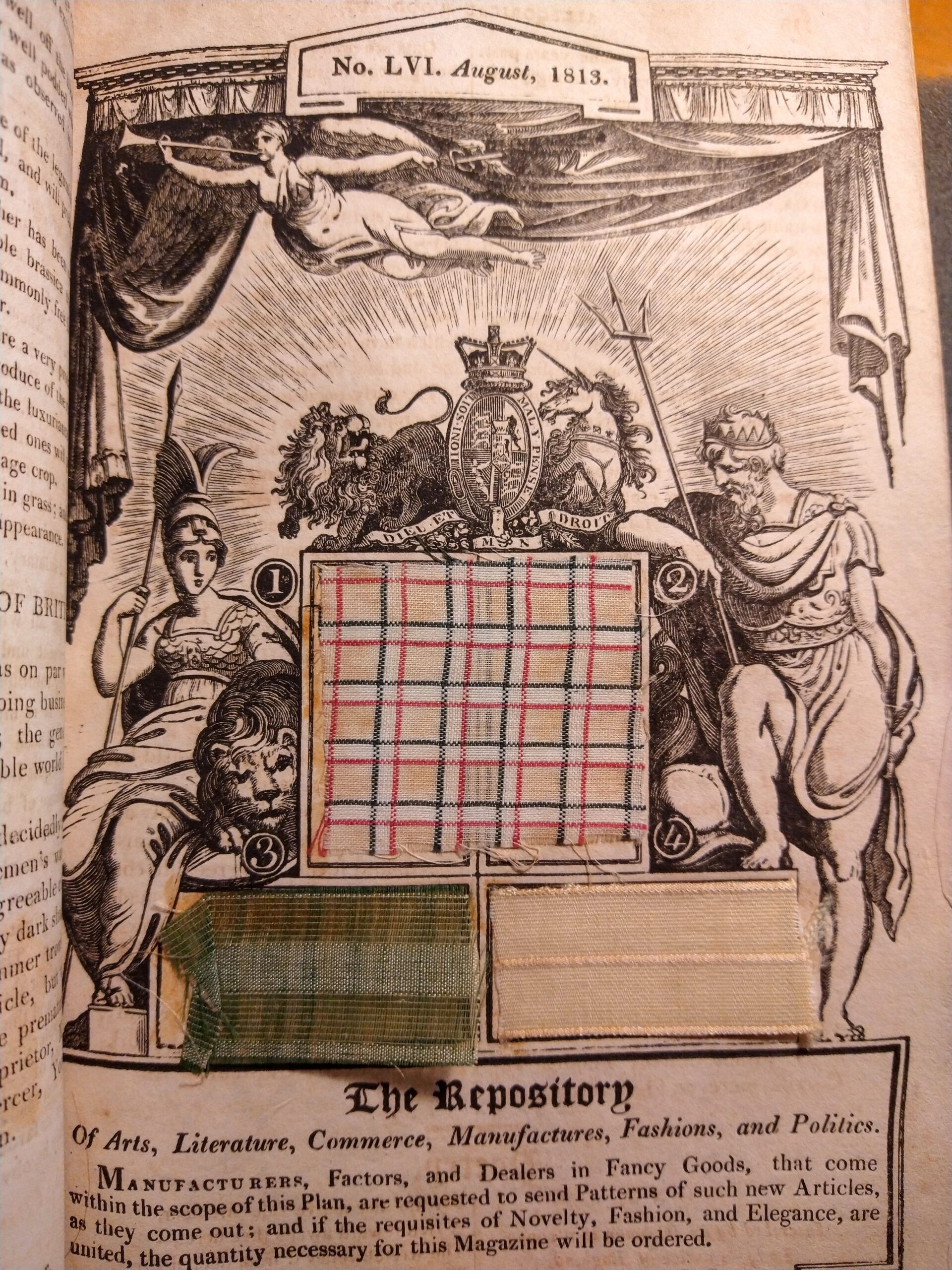
At the gallery and arts library station were three volumes of the Repository of Arts, Literature, Commerce, Manufactures, Fashions and Politics, or Ackermann’s Repository. This periodical was published between 1809 and 1829 and distributed as single pamphlets. Many surviving today were bound into compendium volumes, such as these in the Salisbury House Library Collection. SHLC is home to 5 volumes with issues from 1810-1813. Among the pages of the magazines are reports of the newest fashions, advancements in architecture, and samples of literature. They include many detailed images that were hand tinted and samples of fabrics that have survived in excellent condition. See more from the Internet Archive.

We look forward to recreating these Enlightenment libraries - and more imagined libraries - to share in open houses and events coming soon!

Visit the SHLC at Grinnell College

Sticky post

The Salisbury House Library Collection is open to research and visitors while it is being processed. See curated exhibits from the collection this fall in Burling Library Gallery and year round in the Magic Box in Burling Lobby anytime the library is open. Housed in Grinnell College Special Collections and Archives, visit us in the Reading Room (lower level Burling) for research anytime 1:30-5pm Monday – Friday or by appointment. To learn more about collection holdings and research inquiries, email the project archivist at archives@grinnell.edu. Research guides to support research during processing coming soon! 

Not sure what you’d like to see, but excited to see beyond the exhibit cases? Get in touch with us in advance and we can coordinate a visit for you or a small group to handle collection material in topics you are most interested in. Advance notice allows us to pull the material of most interest to you or some of the ‘greatest hits’.

Interested in bringing a class as an instructor? We are happy to plan a class visit to see SHLC material, learn about accessing and working with primary resources, and more. Sessions using Grinnell College Special Collections and Archives material and SHLC are welcome!

Get in touch! We look forward to introducing you to the Salisbury House Library Collection.

Powered by WordPress & Theme by Anders Norén

css.php
The views and opinions expressed on individual web pages are strictly those of their authors and are not official statements of Grinnell College. Copyright Statement.